Main menu

  • Home
  • Articles
    • Current
    • Published Ahead of Print
    • Archive
    • Supplemental Issues
    • Collections - French
    • Collections - English
  • Info for
    • Authors & Reviewers
    • Submit a Manuscript
    • Advertisers
    • Careers & Locums
    • Subscribers
    • Permissions
  • About CFP
    • About CFP
    • About the CFPC
    • Editorial Advisory Board
    • Terms of Use
    • Contact Us
    • CFP AI policy
    • Politique du MFC en matière d'IA
  • Feedback
    • Feedback
    • Rapid Responses
    • Most Read
    • Most Cited
    • Email Alerts
  • Blogs
    • Latest Blogs
    • Blog Guidelines
    • Directives pour les blogues
  • Mainpro+ Credits
    • About Mainpro+
    • Member Login
    • Instructions
  • Other Publications
    • http://www.cfpc.ca/Canadianfamilyphysician/
    • https://cfpc.my.site.com/s/login/
    • Careers and Locums

User menu

  • My alerts

Search

  • Advanced search
The College of Family Physicians of Canada
  • Other Publications
    • http://www.cfpc.ca/Canadianfamilyphysician/
    • https://cfpc.my.site.com/s/login/
    • Careers and Locums
  • My alerts
The College of Family Physicians of Canada

Advanced Search

  • Home
  • Articles
    • Current
    • Published Ahead of Print
    • Archive
    • Supplemental Issues
    • Collections - French
    • Collections - English
  • Info for
    • Authors & Reviewers
    • Submit a Manuscript
    • Advertisers
    • Careers & Locums
    • Subscribers
    • Permissions
  • About CFP
    • About CFP
    • About the CFPC
    • Editorial Advisory Board
    • Terms of Use
    • Contact Us
    • CFP AI policy
    • Politique du MFC en matière d'IA
  • Feedback
    • Feedback
    • Rapid Responses
    • Most Read
    • Most Cited
    • Email Alerts
  • Blogs
    • Latest Blogs
    • Blog Guidelines
    • Directives pour les blogues
  • Mainpro+ Credits
    • About Mainpro+
    • Member Login
    • Instructions
  • RSS feeds
  • Follow cfp Template on Twitter
  • LinkedIn
  • Instagram
Review ArticlePractice

Diagnosis and management of psoriasis

Whan B. Kim, Dana Jerome and Jensen Yeung
Canadian Family Physician April 2017; 63 (4) 278-285;
Whan B. Kim
Dermatology resident at the University of Ottawa in Ontario.
MD
  • Find this author on Google Scholar
  • Find this author on PubMed
  • Search for this author on this site
Dana Jerome
Head of the Division of Rheumatology at the University of Toronto in Ontario.
MD MEd FRCPC
  • Find this author on Google Scholar
  • Find this author on PubMed
  • Search for this author on this site
Jensen Yeung
Lecturer in the Division of Dermatology at the University of Toronto.
MD FRCPC
  • Find this author on Google Scholar
  • Find this author on PubMed
  • Search for this author on this site
  • For correspondence: jensen.yeung{at}utoronto.ca
  • Article
  • Figures & Data
  • eLetters
  • Info & Metrics
  • PDF
Loading

Article Figures & Data

Figures

  • Tables
  • Figure 1.
    • Download figure
    • Open in new tab
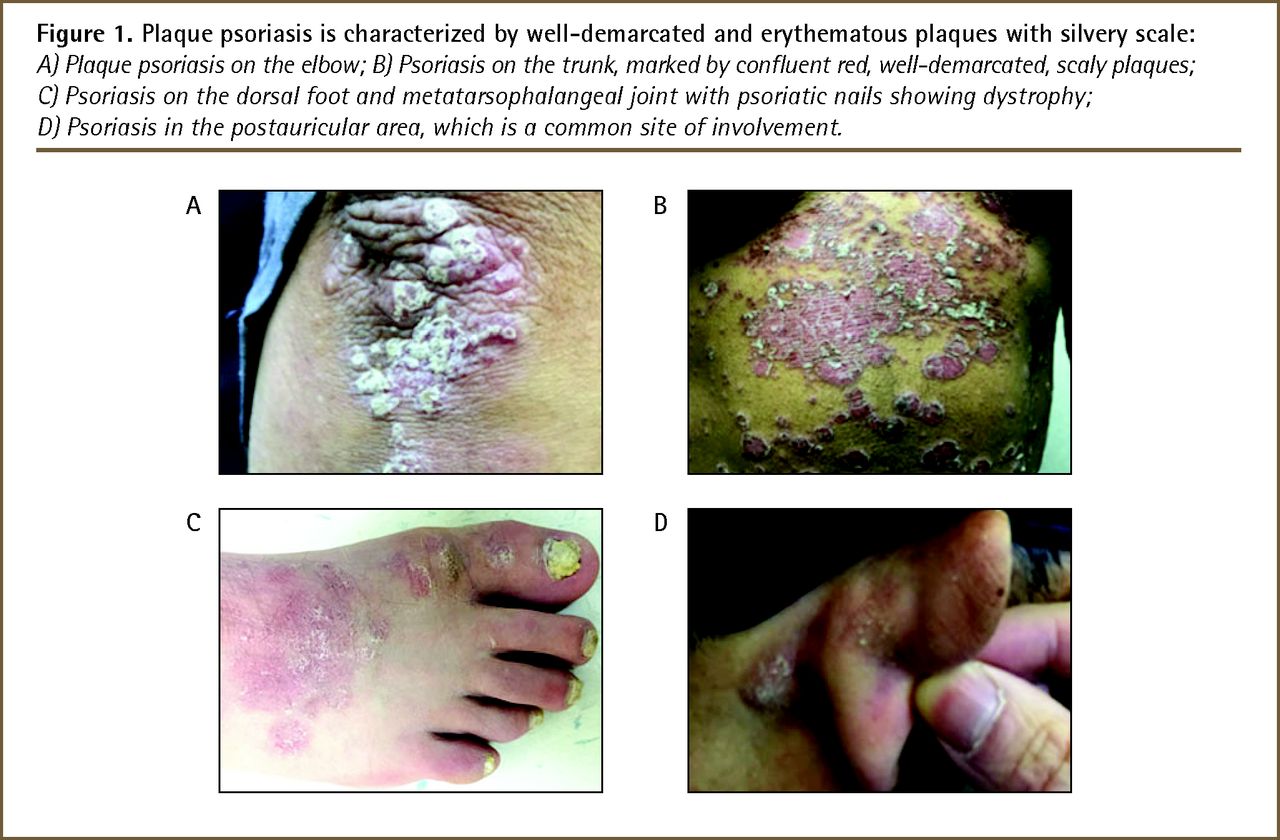
    Figure 1.

    Plaque psoriasis is characterized by well-demarcated and erythematous plaques with silvery scale:

    A) Plaque psoriasis on the elbow; B) Psoriasis on the trunk, marked by confluent red, well-demarcated, scaly plaques; C) Psoriasis on the dorsal foot and metatarsophalangeal joint with psoriatic nails showing dystrophy; D) Psoriasis in the postauricular area, which is a common site of involvement.

  • Figure 2.
    • Download figure
    • Open in new tab
    Figure 2.

    Patients with psoriasis might have nail involvement, which can present without concomitant plaques:

    A) Psoriatic nails, consisting of pitting, distal onycholysis, subungual hyperkeratosis, and crumbling; B) Leukonychia and splinter hemorrhages; C) Distal onycholysis and oil drop sign.

  • Figure 3.
    • Download figure
    • Open in new tab
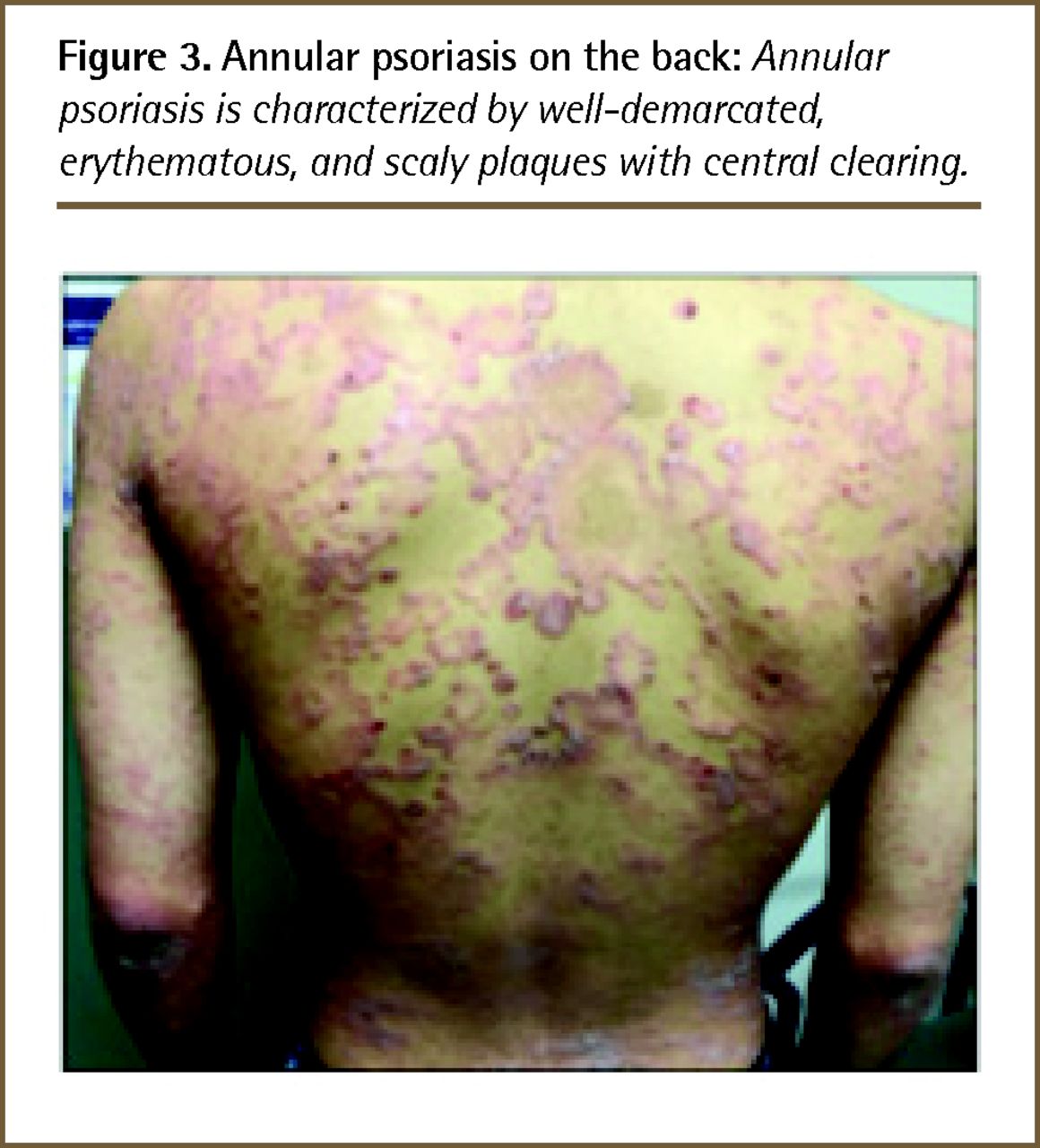
    Figure 3.

    Annular psoriasis on the back: Annular psoriasis is characterized by well-demarcated, erythematous, and scaly plaques with central clearing.

  • Figure 4.
    • Download figure
    • Open in new tab
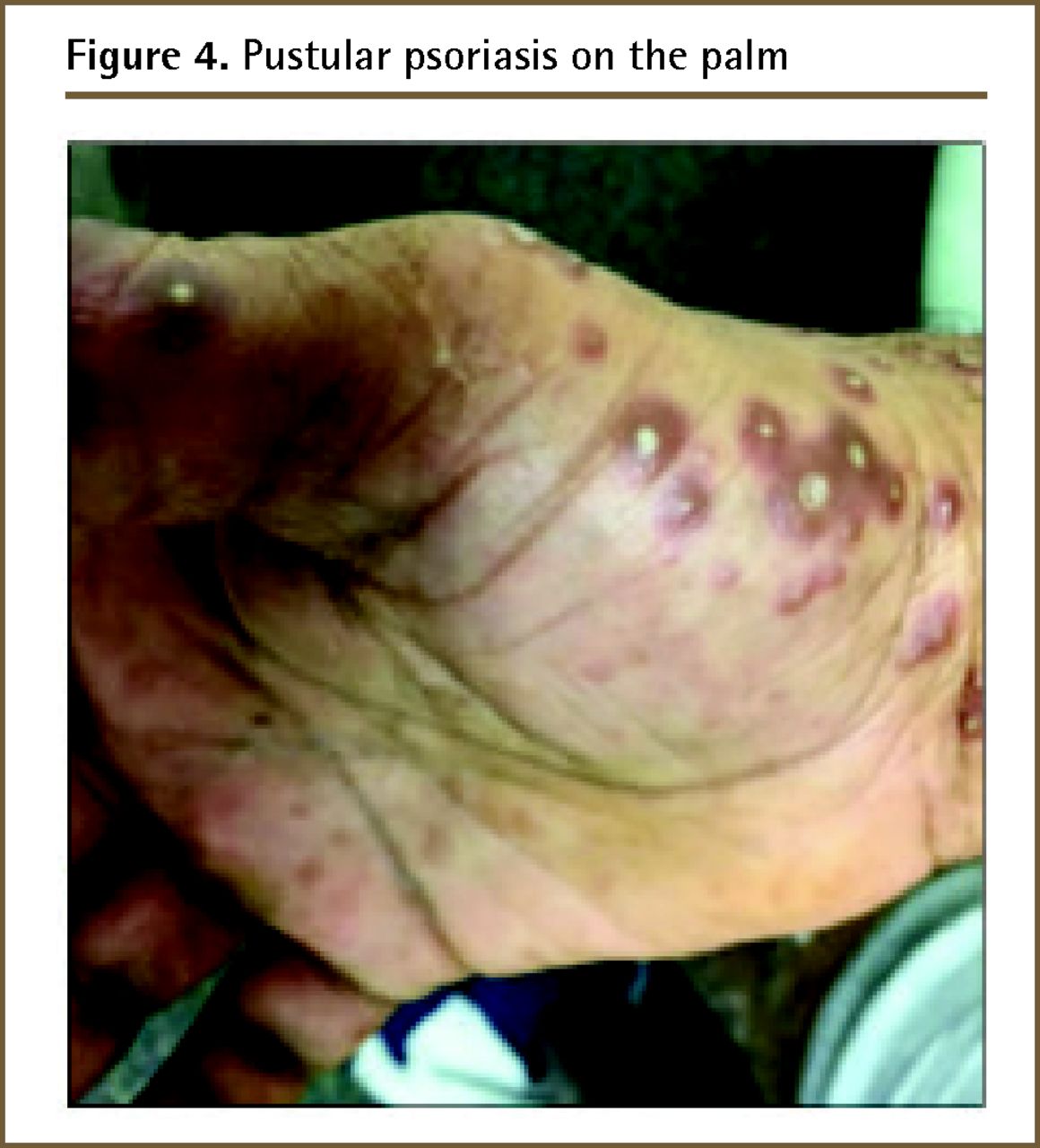
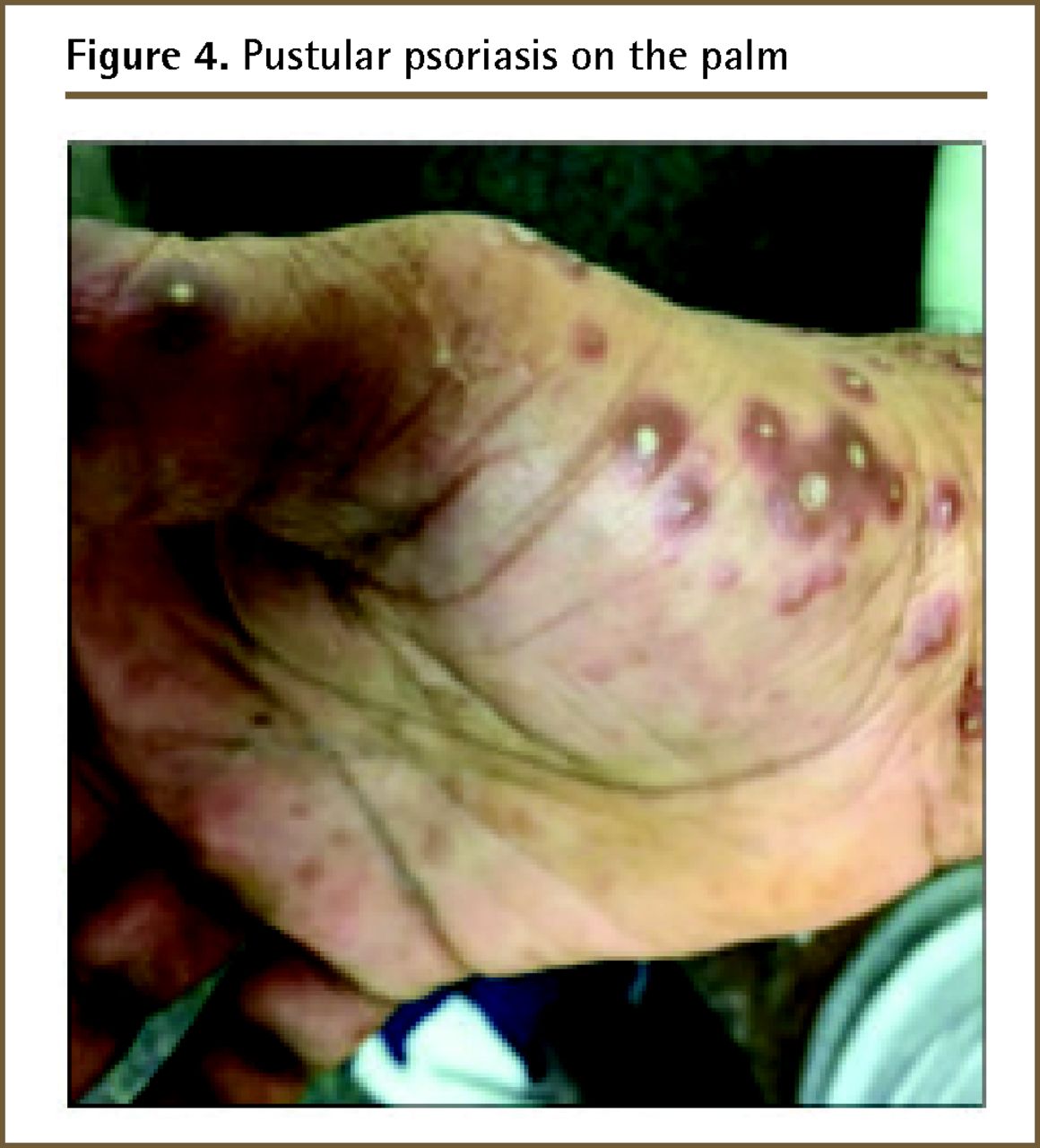
    Figure 4.

    Pustular psoriasis on the palm

  • Figure 5.
    • Download figure
    • Open in new tab
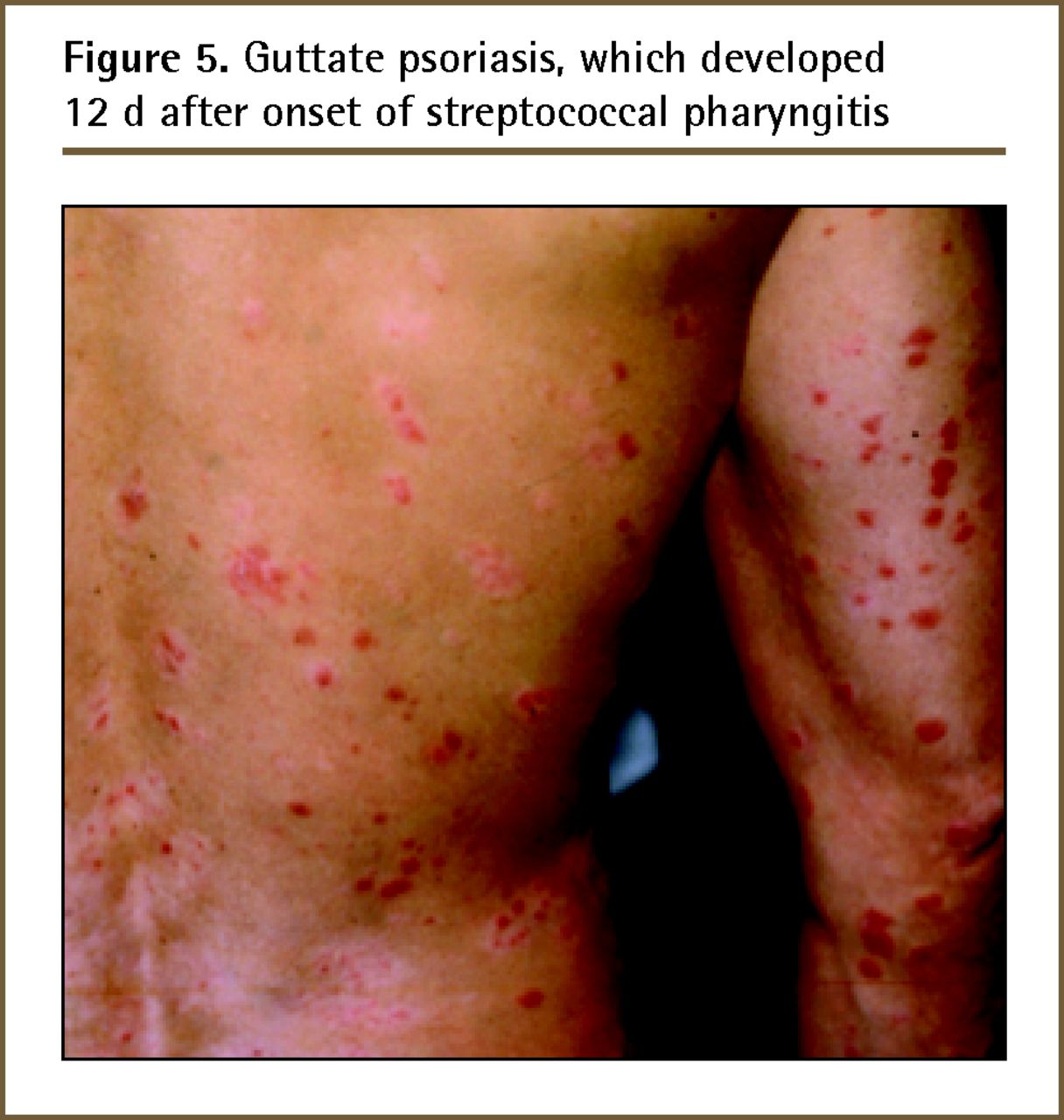
    Figure 5.

    Guttate psoriasis, which developed 12 d after onset of streptococcal pharyngitis

  • Figure 6.
    • Download figure
    • Open in new tab
    Figure 6.

    Approaching erythrodermic psoriasis

  • Figure 7.
    • Download figure
    • Open in new tab
    Figure 7.

    Treatment algorithm for healthy adult men with chronic plaque psoriasis (> 5% BSA) without psoriatic arthritis

    BB—broadband, BSA—body surface area, NB—narrowband, PUVA—psoralen plus UVA, UV—ultraviolet.

Tables

  • Figures
    • View popup
    Table 1.

    Clinical manifestations of psoriasis

    CLINICAL MANIFESTATIONCLINICAL FINDINGS
    Plaque psoriasis
    • Well circumscribed, erythematous, scaly plaques > 0.5 cm in diameter, either as single lesions or as generalized disease

    • Classified further according to anatomic sites

      • Flexural
    • Also known as intertriginous or inverse psoriasis

    • Well circumscribed, minimally scaly, thin plaques localized to the skin folds (inframammary, axillary, groin, genital, natal cleft regions)

      • Nail
    • Can present without concomitant skin plaques

    • Pitting, distal onycholysis, subungual hyperkeratosis, oil drop sign, splinter hemorrhages, leukonychia, crumbling, red lunula

    • Nail involvement is a predictor of psoriatic arthritis

      • Scalp
    • One of the most common sites of psoriasis

    • Often difficult to treat

      • Palmoplantar
    • Localized to the hands and soles of feet

    • Confluent redness and scaling without obvious plaques to poorly defined scaly or fissured areas to large plaques covering the palm or sole

    Other variants
      • Guttate
    • Acute eruption of “dew-drop,” salmon-pink, fine-scaled, small papules on the trunk or limbs

    • Can follow history of group A streptococcal pharyngitis or perianal group A streptococcus dermatitis

      • Pustular
    • Sheets of monomorphic pustules on painful, inflamed skin

    • Most commonly localized to the palms or soles

      • Erythroderma
    • Acute or subacute onset of generalized erythema covering 90% or more of the patient’s entire body with little scaling

    • Might be associated with hypothermia, hypoalbuminemia, electrolyte imbalances, and high-output cardiac failure

    • Life-threatening emergency

      • Annular
    • Well demarcated erythematous scaly plaques with central clearing

    • Data from the Canadian Psoriasis Guidelines Committee.1

    • View popup
    Table 2.

    Measures of disease severity

    SEVERITYMEASURES*
    Mild
    • < 3% BSA†

    • Disease with a minimal effect on the patient’s QoL; patient can achieve an acceptable level of symptomatic control by routine skin care measures and topical therapy

    Moderate
    • 3% to 10% BSA†

    • Disease that cannot be, or would not be expected to be, controlled to an acceptable degree by routine skin care measures or disease that substantially affects the patient’s QoL, either because of the extent of the disease, physical discomfort (pain or pruritus), or location (eg, the face, hands, feet, or genitals)

    Severe
    • > 10% BSA†

    • Disease that cannot be, or would not be expected to be, satisfactorily controlled by topical therapy and that causes severe degradation of the patient’s QoL

    • BSA—body surface area, QoL—quality of life.

    • ↵* These are definitions for clinical practice, as applied in the Canadian guideline. The Psoriasis Area and Severity Index is another measure of disease severity, based on BSA, erythema, induration, and scaling.

    • ↵† The size of a single hand is estimated to be 1% BSA.

    • Data from the Canadian Psoriasis Guidelines Committee.1

    • View popup
    Table 3.

    Differential diagnoses and distinguishing clinical features

    DIFFERENTIAL DIAGNOSESDISTINGUISHING CLINICAL FEATURES
    Atopic dermatitis• Predominant symptom of pruritus and typical morphology and distribution (flexural lichenification in adults and older children; facial and extensor papules and vesicles in infancy)
    Contact dermatitis• Patches or plaques with angular corners, geometric outlines, and sharp margins dependent on the nature of the exposure to the irritant or allergen
    Lichen planus• Violaceous lesions and frequent mucosal involvement
    Secondary syphilis• Copper-coloured lesions and frequent involvement of palms and soles
    Mycosis fungoides• Irregularly shaped lesions with asymmetric distribution, peculiar colour, and wrinkling due to epidermal atrophy
    Tinea corporis• Fewer lesions with annular configuration
    Pityriasis rosea• Tannish-pink, oval papules and patches with “Christmas tree” configuration on trunk with sparing of the face and distal extremities
PreviousNext
Back to top

In this issue

Canadian Family Physician: 63 (4)
Canadian Family Physician
Vol. 63, Issue 4
1 Apr 2017
  • Table of Contents
  • About the Cover
  • Index by author
Print
Download PDF
Article Alerts
Sign In to Email Alerts with your Email Address
Email Article

Thank you for your interest in spreading the word on The College of Family Physicians of Canada.

NOTE: We only request your email address so that the person you are recommending the page to knows that you wanted them to see it, and that it is not junk mail. We do not capture any email address.

Enter multiple addresses on separate lines or separate them with commas.
Diagnosis and management of psoriasis
(Your Name) has sent you a message from The College of Family Physicians of Canada
(Your Name) thought you would like to see the The College of Family Physicians of Canada web site.
CAPTCHA
This question is for testing whether or not you are a human visitor and to prevent automated spam submissions.
Citation Tools
Diagnosis and management of psoriasis
Whan B. Kim, Dana Jerome, Jensen Yeung
Canadian Family Physician Apr 2017, 63 (4) 278-285;

Citation Manager Formats

  • BibTeX
  • Bookends
  • EasyBib
  • EndNote (tagged)
  • EndNote 8 (xml)
  • Medlars
  • Mendeley
  • Papers
  • RefWorks Tagged
  • Ref Manager
  • RIS
  • Zotero
Respond to this article
Share
Diagnosis and management of psoriasis
Whan B. Kim, Dana Jerome, Jensen Yeung
Canadian Family Physician Apr 2017, 63 (4) 278-285;
Twitter logo Facebook logo Mendeley logo
  • Tweet Widget
  • Facebook Like
  • Google Plus One

Jump to section

  • Article
    • Abstract
    • Quality of evidence
    • Main message
    • Conclusion
    • Notes
    • Footnotes
    • References
  • Figures & Data
  • eLetters
  • Info & Metrics
  • PDF

Related Articles

  • Diagnostic et prise en charge du psoriasis
  • PubMed
  • Google Scholar

Cited By...

  • PLGA-Soya Lecithin Based Hybrid Nanocomposite for Targeted Topical Delivery of Resveratrol in Psoriasis Management
  • Efficacy and Safety of Cannabis Transdermal Patch for Alleviating Psoriasis Symptoms: Protocol for a Randomized Controlled Trial (CanPatch)
  • RNA sequencing of a large number of psoriatic patients identifies 131 novel miRNAs and 11 miRNAs associated with disease severity
  • Glycoconjugation as a Promising Treatment Strategy for Psoriasis
  • Nascent transcript analysis of glucocorticoid crosstalk with TNF defines primary and cooperative inflammatory repression
  • Nascent transcript analysis of glucocorticoid crosstalk with TNF defines primary and cooperative inflammatory repression
  • Google Scholar

More in this TOC Section

Practice

  • Approach to diagnosis and management of childhood attention deficit hyperactivity disorder
  • Determining if and how older patients can safely stay at home with additional services
  • Managing type 2 diabetes in primary care during COVID-19
Show more Practice

Clinical Review

  • All in on ARBs
  • Approach to mallet finger injury
  • 2025 update of the Greig Health Record
Show more Clinical Review

Similar Articles

Navigate

  • Home
  • Current Issue
  • Archive
  • Collections - English
  • Collections - Française

For Authors

  • Authors and Reviewers
  • Submit a Manuscript
  • Permissions
  • Terms of Use

General Information

  • About CFP
  • About the CFPC
  • Advertisers
  • Careers & Locums
  • Editorial Advisory Board
  • Subscribers

Journal Services

  • Email Alerts
  • Twitter
  • LinkedIn
  • Instagram
  • RSS Feeds

Copyright © 2026 by The College of Family Physicians of Canada

Powered by HighWire